The Faraday Institution provides an independent, evidence-based understanding of battery economics, societal issues, capabilities, and competitive position through commissioned studies and insights publications. The aim is to bridge knowledge gaps across industry, academia and government. As part of this remit the team provides briefings to policy makers and responses to public consultations.
Contact Stephen Gifford, Chief Economist, to discuss policy advice and business intelligence.
Faraday Insights
The Faraday Institution regularly publishes Faraday Insights, evidence-based assessments of the market, economics, commercial potential, and capabilities for energy storage technologies and the transition to a fully electric UK.
If you would like to suggest a subject for a future Insight, please contact us.
 The insight outlines the increasing size of the global electric market and explores the different low carbon technologies that could become available for aviation, particularly hydrogen, batteries and sustainable aviation fuels. The performance characteristics of battery technology for aviation and proposed actions to develop and support the UK aerospace industry in the transition are also highlighted.
 Commercial battery chemistries are rapidly evolving, driven by market demands, improved cathode materials and electrification of transport. Existing cathode chemistries such as lithium iron phosphate and lithium nickel manganese cobalt batteries continue to fulfil market requirements. However, with continued research and investment, next-generation lithium-ion batteries are likely to occupy a substantial segment of the battery market beyond 2030, bringing significant improvements in performance and/or cost.
 Lithium-ion battery cells in electric vehicles are already safe and failure incidents are very rare. But with increasing use across automotive, stationary storage, aerospace and other sectors, there is a need to make them even safer. Whilst lithium-ion cell fires are extremely infrequent, they can occur under conditions of mechanical, thermal or electrical stress or abuse. Building safer and more reliable lithium-ion battery packs, as well as improving the design and optimisation of safety systems, will help to decrease the risks associated with rising lithium-ion battery usage.
 With the global population of urban areas set to increase by 50% to 6.7 billion by 2050, managing mobility in cities will be crucial. Micromobility has the potential to substantially reduce congestion and pollution in urban areas and increase productivity. However, several challenges are currently facing the micromobility industry, including rider and battery safety. The UK needs to ensure regulation and safety keep pace with burgeoning transportation choices.
 Faraday Insights – Issue 15 / Institute for Molecular Science and Engineering Briefing Paper No. 8
 The roll-out of charging infrastructure in the UK is critical to the transition to electric vehicles (EVs). The UK charging infrastructure network needs to be expanded quickly, not only to satisfy the rapid growth in EV ownership and driving but also to provide non-EV owners with the confidence to purchase an EV. Charging points need to be in the right place and of the right type, with more offering smart charging and vehicle-to-grid capability. The existing network will be technologically compatible with next generation batteries but needs to be future proofed with respect to charging behaviour.
 The Faraday Institution has developed an analytical methodology to assess early-stage commercialisation potential for each of its research projects. The assessment results in a bespoke approach to commercialisation tailored to each project, the prioritisation of limited resources and the development of consortia that are investment ready. The approach can be implemented by any organisation with limited resources and a portfolio of research projects.
 Electric vehicles (EVs) have much lower life cycle carbon emissions than petrol and diesel vehicles using internal combustion engines (ICE). Carbon emissions over the EV life cycle are falling fast as the UK electricity grid is decarbonised and the UK moves towards Net Zero. Total life cycle carbon emissions of a medium-sized battery EV will be about one-quarter of a petrol car sold in 2025, with UK-manufactured EV batteries 12% greener than the European average.
 Sodium-ion batteries are an emerging battery technology with promising cost, safety, sustainability and performance advantages over current commercialised lithium-ion batteries. Key advantages include the use of widely available and inexpensive raw materials and a rapidly scalable technology based around existing lithium-ion production methods. These properties make sodium-ion batteries especially important in meeting global demand for carbon-neutral energy storage solutions.
 Fundamental research on lithium-ion batteries (LIBs) dates to the 1970s, with their successful commercialisation delivered by Sony in 1991. Since then, LIBs have revolutionised the world of portable electronics, owing to their high energy density and long lifespan. Whilst LIB uptake initially powered small devices, they are now enabling global growth in electric vehicles, as well as having an increasing presence in new areas such as grid storage. Whilst LIBs will continue to lead electrification in multiple sectors, there are still requirements for improvements in lifetime, performance and safety. To achieve these researchers need to better understand – and find ways to mitigate – the many causes of battery degradation.
 The move to electric vehicles (EVs) has the potential to reduce carbon emissions and air pollution. However, the transition also brings associated environmental challenges with the need for efficient recycling systems to tackle the large numbers of EV lithium-ion batteries reaching end-of-life. Unless this waste flow is managed, some of the gains of the transition to EVs will be lost. Effective waste management infrastructure and a supportive regulatory framework will be necessary to realise the full benefits of a decarbonised transport sector.
 Lithium-sulfur technology has the potential to offer cheaper, lighter-weight batteries that also offer safety advantages. After initially finding use in niche markets such as satellites, drones and military vehicles, the technology has the potential to transform aviation in the long-term. Electric aircraft offering short-range flights or vertical take-off and landing (including personalised aviation and flying taxis in cities) are distinct possibilities by 2050. The UK, which is already home to established lithium-sulfur battery manufacturers and to leading academics in the field, has a great opportunity to be the global leader in this ground-breaking technology.
 A rapidly growing market for batteries across the globe has intensified pressures on suppliers of cobalt to meet surges in demand. Such pressures have impacted the livelihoods of miners – in particular, those working in the Democratic Republic of Congo’s artisanal and small-scale mines – in both beneficial and potentially deleterious ways. International efforts by businesses, governments, and NGOs to secure a responsible supply chain for cobalt have the potential to protect lives and livelihoods while ensuring corrupt practices are held in check.
 Ending UK sales of new vehicles running on diesel and petrol by 2030 will massively increase the demand for lithium, cobalt and nickel used to manufacture electric vehicle batteries. Many countries around the world are embarking on a similar path to electrification. Even so, global markets for raw materials should be able to deliver the demand in the UK and elsewhere. But action is needed now to iron out likely bottlenecks in supply chains.
 The development of solid-state batteries that can be manufactured at a large scale is one of the most important challenges in the battery industry today. The ambition is to develop solid-state batteries, suitable for use in electric vehicles, which substantially surpass the performance, safety, and processing limitations of lithium-ion batteries. In contrast to research into lithium-ion batteries, which will provide incremental gains in performance toward theoretical limits, research into solid-state batteries is long-term and high-risk but also has the potential to be high-reward.
 Fire, police, ambulance, and service personnel will need new skills to handle EV accidents and repair to ensure the safety of themselves and others. The number of those workers who need reskilling is substantial and resources are needed to support sector skills councils and providers for regional delivery of accredited courses.
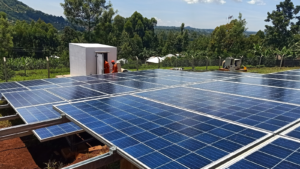
 Over 800 million people worldwide do not have access to electricity and, of those that do, many suffer from an unreliable supply. Diesel and petrol generators commonly used in developing countries bring problems of noise, air quality and climate impacts. Energy storage technologies including batteries have the potential to replace generators and provide cheap, clean and reliable electricity to millions of people.
 The transition to electric vehicles will substantially increase the demand for batteries. Across Europe,
 The global automotive industry is transitioning from the internal combustion engine to electric
Faraday Insights and Reports are included in the Government Office for Science’s Emerging Technologies Resource Library, which includes over 300 technology reports available for use by teams across government to facilitate knowledge sharing.
Reports
The following reports were commissioned by the Faraday Institution or represent key publications in which the Faraday Institution played a contributing role.



 This Faraday Report gives an overview of current battery technologies and markets for high energy applications. It is intended for use primarily by scientists and engineers in academia and industry as an introduction to current state of the art and an indication of what may be coming to the market over the next 5-10 years. For those not familiar with batteries for high energy applications, the report will inform early stages of product road-mapping and design. It also will provide readers with pointers of where to look for more detailed specification information. For those more familiar with the relevant battery technologies the report gives an introduction to the competitive landscape.
 ement Assistance Programme (ESMAP) on the report “Global Overview of Energy Storage Performance Test Protocols” published in October 2020.
Input into Inquiries and Consultations
The Faraday Institution provides detailed written and oral responses to government inquiries and consultations to inform the UK’s transition to energy storage technologies:
Contact
Contact Stephen Gifford, Chief Economist, [email protected] +44 1235 425300
regarding economics or policy studies being undertaken by the Faraday Institution.